The Situation
As the organization expanded its marketing initiatives, inconsistencies began to emerge across brand applications, partner business units, and marketing channels. While foundational brand guidelines had been established—including typography, color, illustration, and photography standards—additional governance was needed to ensure consistent execution at scale.
I was tasked with expanding the brand system, refining design parameters, and aligning standards across teams to improve brand consistency, accessibility, and long-term scalability. This is an ongoing initiative that continues to evolve as new assets and communication channels are introduced.
The Opportunity
Key focus areas included:
• Expanding design system standards for iconography and character illustration
• Aligning visual guidelines across partner business units
• Establishing channel-specific typography standards
• Improving accessibility by identifying and replacing non-WCAG-compliant assets
• Clarifying photography creation and usage standards
The goal was to transform a collection of foundational guidelines into a more comprehensive and scalable design system that could support future growth while maintaining a consistent brand experience.
Brand System Expansion
To support evolving marketing needs, I expanded the icon library with visuals better aligned to our B2B healthcare audience and developed detailed standards for creating future assets. Beyond iconography, I created self-service templates for key marketing deliverables including social media, email banners, white papers, and event collateral.
These resources were incorporated into a centralized Canva Brand Kit, enabling team members to create on-brand materials while maintaining alignment with updated guidelines, approved assets, accessibility standards, and brand governance requirements.
Iconography Standards
The comparison shown below highlights the evolution of the iconography guidelines. While the original standards defined general color and line weight direction, they left significant room for interpretation when creating new assets.
To improve consistency and scalability, I developed a structured iconography system that established precise line weights, grid construction rules, scaling behavior, and usage standards. These updates transformed subjective design decisions into repeatable design principles, allowing future icons to be created with greater consistency across teams, channels, and applications.
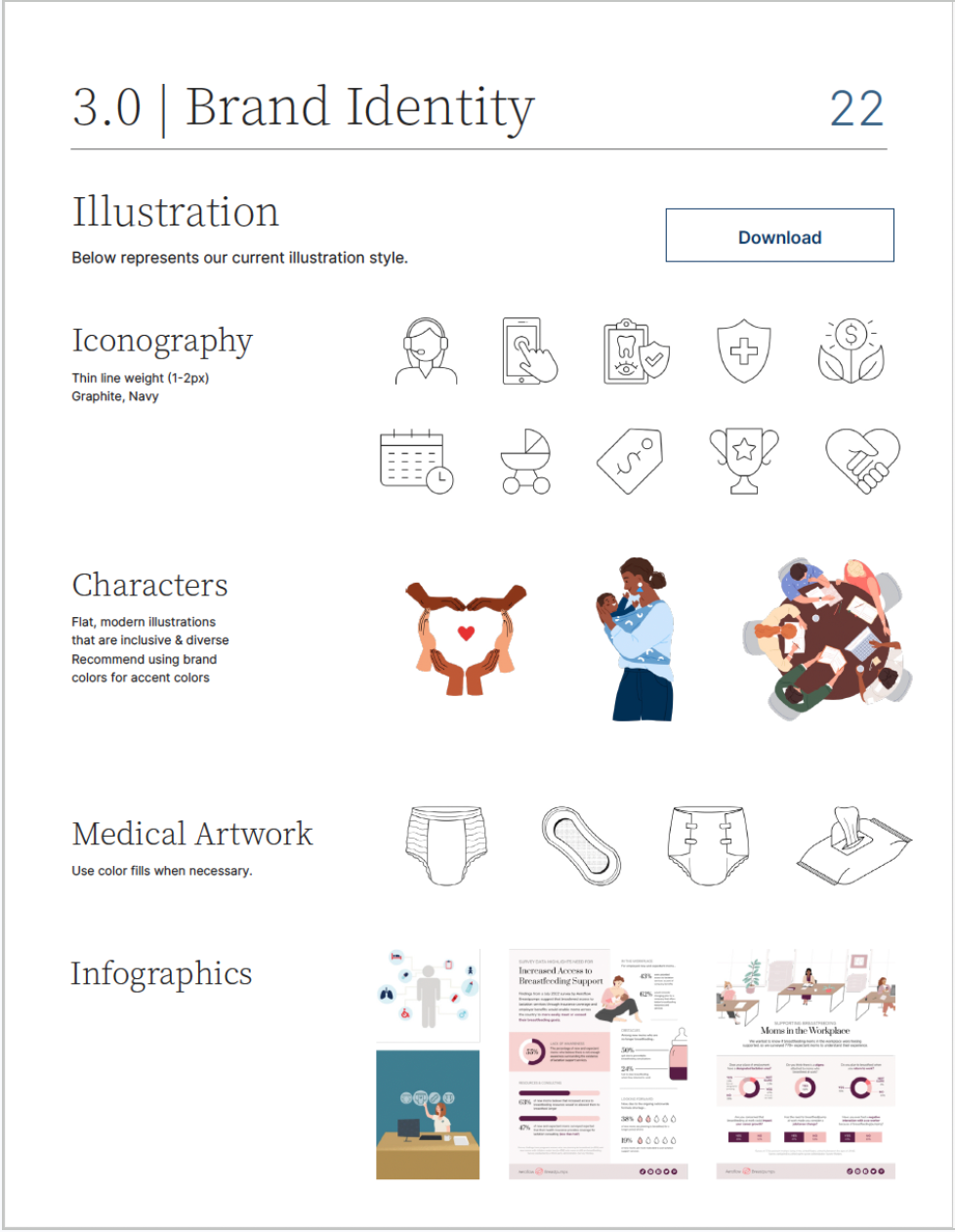
Existing Icon and illustration guidelines
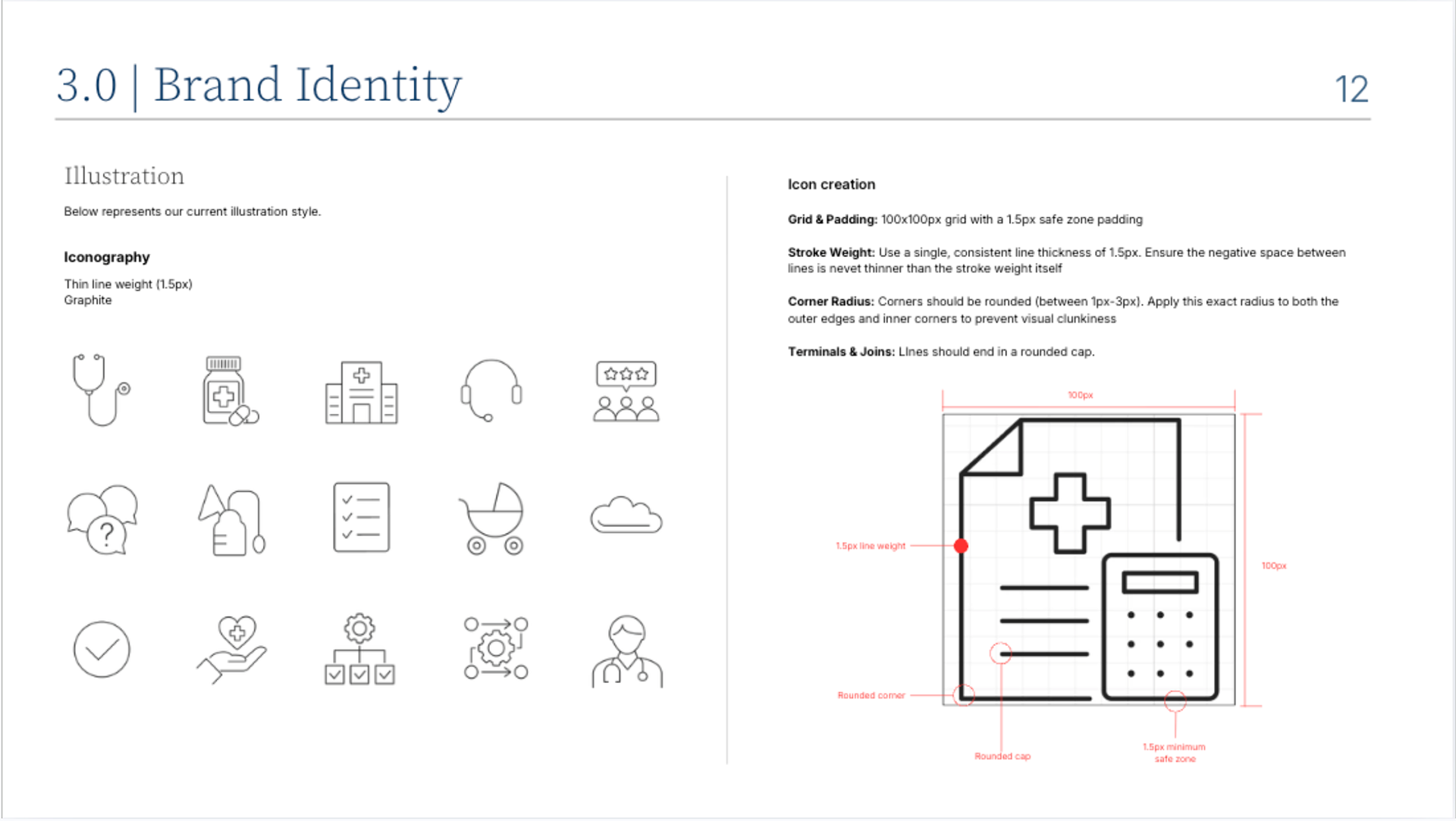
Revised icon guidelines